 Park ShieldGet Park Shield
Driver guide
Parking charge notice or penalty charge notice?
Last checked
Both are called a “PCN” and both ask you for money. But a council penalty charge notice and a private parking charge notice follow different rules and appeal routes. Deadlines start straight away.
The short answer
Penalty charge notice means a public authority issued it under parking law. Parking charge notice usually means a private company says you broke the car park’s terms. Check who issued it, then challenge that issuer first. Do not ignore either one.

How to tell which one you have
- Who issued it? Councils, TfL and (in Northern Ireland) the Department for Infrastructure issue public PCNs. Private notices name a company or landowner.
- What does it call itself? Council notices say “Penalty Charge Notice” and usually mention a contravention. Private notices often say “Parking Charge Notice”, “parking charge” or “notice to keeper”.
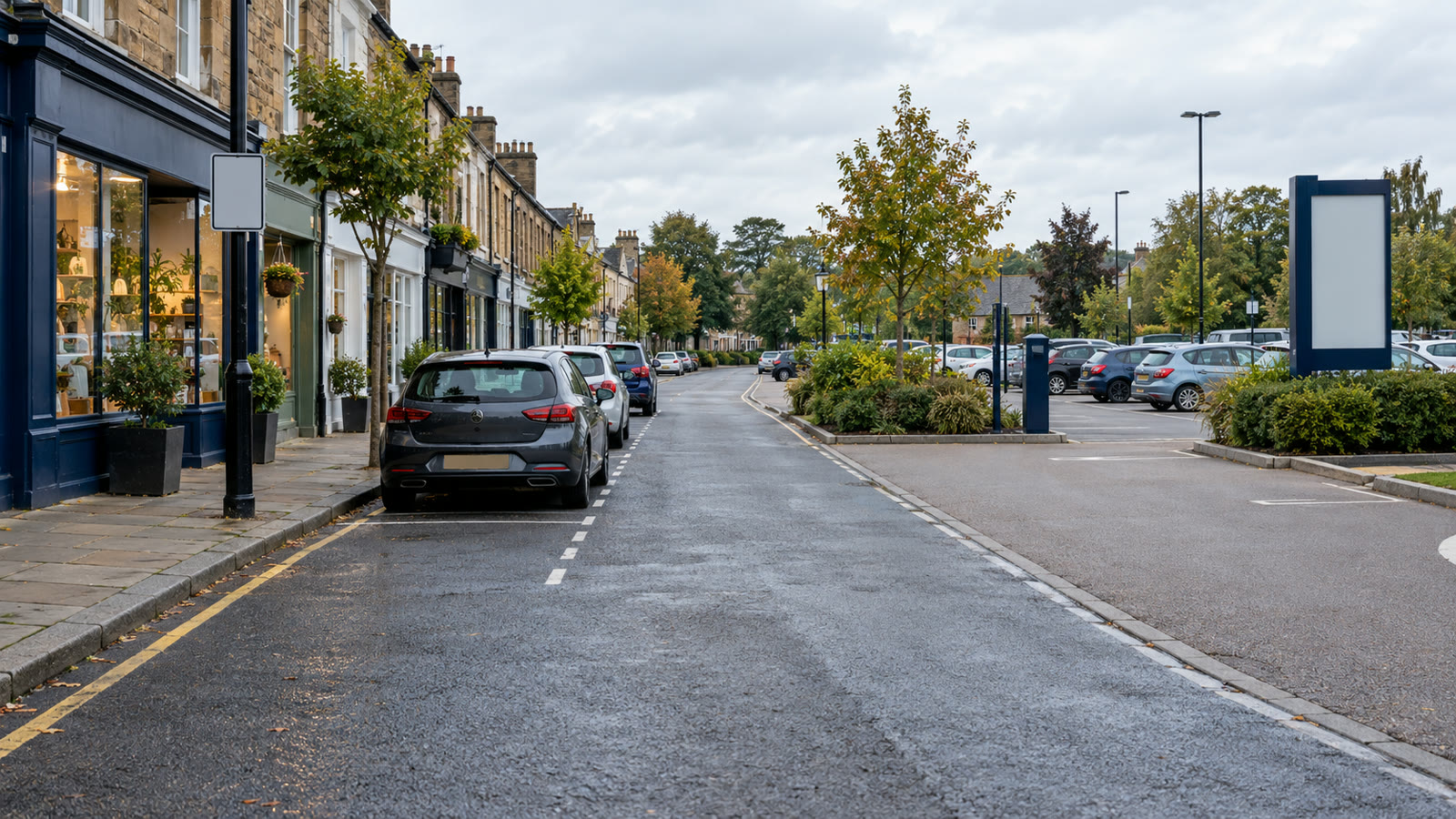
- Which setting? Yellow lines, on-street bays and council car parks point to a public PCN. Retail, hospital, station and private office car parks often point to a private operator.
- What does the notice say about its route? Check the issuer and follow the dates printed on your own notice.

Is it genuine? Check before you pay
Councils do not ask for PCN payment by text. Do not use a link in an unexpected message. Go to the council’s website yourself or use GOV.UK to find it. You can forward suspicious UK texts to 7726, free.
A message claiming to be from a private operator may or may not be genuine. Look up that operator’s official contact details yourself; do not rely on the message link.
Council penalty charge notices
England and Wales
- PCN: you usually have 28 days to pay. In England, paying within 14 days normally reduces the charge by 50%; many camera/postal PCNs give 21 days for the reduced charge.
- Challenge: if the PCN was put on the vehicle, challenge early. A camera/postal PCN can act as the Notice to Owner.
- Formal representations: a Notice to Owner gives 28 days to make representations. If rejected, you can normally appeal to the Traffic Penalty Tribunal (outside London and Wales) or London Tribunals (London).
- Do not ignore it: a charge certificate can increase the penalty by 50%. Check your notice and the issuer’s instructions.
Scotland and Northern Ireland
Rules and public bodies differ. In Scotland, decriminalised parking appeals can go to the First-tier Tribunal for Scotland. Northern Ireland public parking PCNs are issued for the Department for Infrastructure and appeals go to the Northern Ireland Traffic Penalty Tribunal. Follow the dates and route on the notice.
Private parking charge notices
A private parking charge notice is a civil claim: the operator says you broke the terms displayed at a car park. It is not a council penalty, but do not dismiss it. Keep evidence such as photos of signs, your payment record or an appointment letter. Our checklists cover what to record if a payment fails and what to check when you arrive at a hospital car park.
How to challenge
- Appeal to the operator first, in writing, and save a copy.
- If the operator rejects you, use the independent service named in its rejection letter: POPLA for BPA members or the Independent Appeals Service (IAS) for IPC members.
- Both services normally allow 28 days after the rejection, but the deadline in your letter is decisive.
Keeper liability
In England and Wales, Schedule 4 of the Protection of Freedoms Act 2012 can allow an operator to pursue the registered keeper if it meets strict conditions. The rules differ in Scotland and Northern Ireland. This is general information, not advice on your own notice.
The industry Single Code of Practice
The BPA and IPC joint code sets rules for members, including a £100 charge cap, at least a 40% early-payment discount within 14 days, periods to read signs and leave after a permitted stay, and standards for appeals. It is an industry code, not the government’s statutory code. The government’s new code, laid before Parliament on 20 October 2026, will replace it once in force. Check the current code and your notice before relying on an amount or deadline.
What is changing?
Status as of 30 October 2026. The government laid a new statutory Private Parking Code of Practice before Parliament on 20 October 2026 (Commons written statement HCWS393). It covers private car parks in England, Scotland and Wales. It includes a minimum 5 minutes to decide whether to park, a 10-minute grace period to leave, a £100 maximum charge (£60 if paid within 14 days), and £20 for some honest mistakes on appeal. It is not in force yet: Parliament has a 40-day scrutiny period, and the code takes effect 21 days after it is issued, replacing the industry code described above.
In April 2026, the Competition and Markets Authority wrote to the government with recommendations for the new code. The minister’s statement says a further consultation will follow, covering debt recovery fees and the remaining topics the CMA raised.
Read our summary: New Private Parking Code: what changes for drivers.
Avoiding the next one
- Read the time plate, entrance signs and bay signs—not just the road marking.
- Type your registration carefully and keep payment confirmation.
- Set a reminder before a permitted stay ends; do not treat a grace period as extra parking time.
Park Shield is in early access. Its AI Sign Scan is a reading aid to help you understand a parking sign; the physical sign and operator terms still control. Join the waitlist.
Frequently asked questions
Do I have to pay a parking charge notice?
It is a civil claim, not a fine, but it can lead to court action if ignored. If you think it is wrong, appeal first and follow the relevant independent appeal route.
What is the difference between a PCN and a penalty charge notice?
PCN can mean either a public penalty charge notice or a private parking charge notice. Check the issuer.
How long do I have to appeal?
Deadlines vary. Council procedures commonly involve 28-day stages; POPLA and IAS normally allow 28 days after a private operator rejects you. Always use the date printed on your own notice or rejection letter.
Sources: GOV.UK: parking tickets · GOV.UK: challenge a parking fine · Traffic Penalty Tribunal: SMS scam alert · POPLA FAQs · IAS FAQs · MHCLG consultation · Private Parking Code of Practice (as laid) · Parliament statement HCWS393 · CMA letter to government.
Not sure what a sign means?
Park Shield is building AI Sign Scan to help you read a parking sign. Always check the result against the physical sign.
Join the founding-driver group